How much should my child practise piano?
A year-by-year guide to daily practice, ten practice tips, and five ways parents can help — for families at the studio in Bath and anyone else who finds it useful.
How much should my child practise?
This is a general guide to the expected daily time for piano practice, six days a week. Practice time does not have to be done all in one sitting. It may be divided into two or three sessions throughout the day.
| Year of lessons | Daily practice |
|---|---|
| First year, months 1–6 | 15–20 minutes |
| First year, months 7–12 | 20–30 minutes |
| Second year | 45 minutes |
| Third, fourth and fifth years | 60 minutes |
| Sixth and seventh years | 1¼ hours |
| Eighth, ninth and tenth years | 1½ hours |
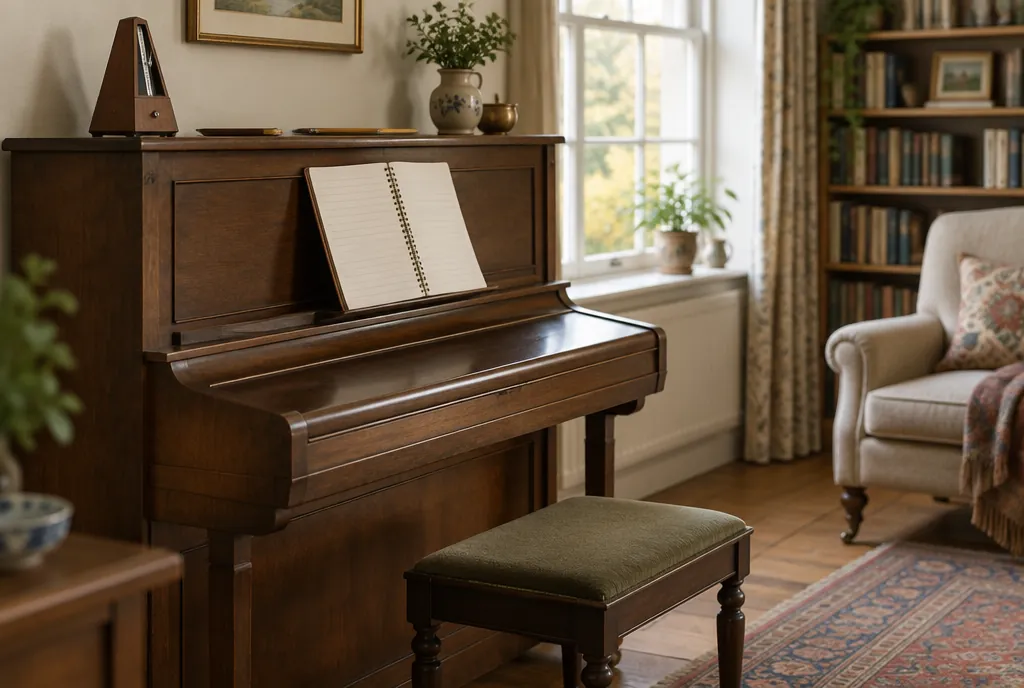
Ten tips for piano practice
Written for students; useful for parents too.
- Schedule your practice time.
Decide how many days each week, and how many minutes each day, you will practise. Write a specific time for each day in your calendar and stick to it — just as you would for any other scheduled activity, such as sports practice, a play rehearsal, or a class.
- Practise without distractions.
Silence your phone, avoid texting, and minimise interruptions from family or friends. The more you can fully concentrate, the more you will accomplish during your practice time.
- Divide up your daily practice time.
If you plan to practise for 30 minutes a day but don't have time to do it all at once, break it up into two 15-minute sessions, or a 20-minute and a 10-minute session — any combination that adds up to your intended practice time.
- Spread your practice time evenly over the week.
Do your best to practise the same amount each day. Cramming all your practice into one or two days won't work. Daily repetition is needed to accumulate new skills — it can't be rushed or learned in one session.
- Have a plan before you start.
Decide (with the help of your teacher) exactly what you will practise each day, how you will practise it, and for how long. Be specific with your goals for each day and what you wish to accomplish in the week.
- Use your metronome.
Start slowly at a speed where you can play everything correctly. Gradually increase the tempo as you become more comfortable. Practising slowly leads to faster and more accurate learning, helping you feel more secure when playing up to speed.
- Start with scales.
Playing scales (and other technical exercises) first helps warm up your hands and focus your mind before working on your music. If you leave scales for the end of your practice session, you're more likely to skip them.
- Use isolation and repetition.
Identify the most difficult bars and practise them first. Play them slowly and hands separately before putting them together. Set a goal for correct repetitions before moving on. For example, play two difficult bars: left hand alone 10 times, right hand alone 10 times, then hands together 10 times.
- Sight-read every day.
The best way to improve sight-reading is to read new music daily. As your pieces become more difficult and take longer to master, you may spend less time on sight-reading, weakening your skills. Take just five minutes per practice session to sight-read a new piece and keep your reading sharp.
- Memorise early and often.
Memory is like a muscle — the more you use it, the stronger it gets. The sooner you start memorising a piece, the more secure your memory will be. Make memorisation part of your learning process, even for pieces you don't plan to perform. This will help develop and strengthen your ability to play from memory.
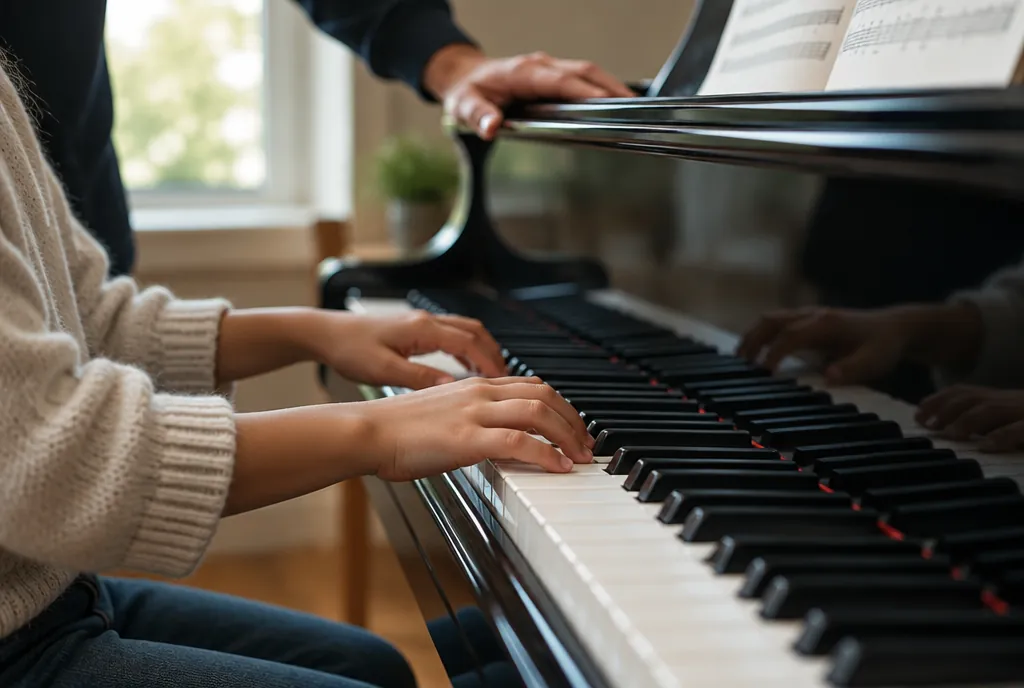
How parents can help
To ensure the success of each lesson:
- Check that your child has: (a) completed each week's assignment; (b) filled in the Practice Log in the assignment book.
- Arrive on time for lessons and classes.
- Make sure your child arrives with the necessary materials.
- Keep your child's fingernails cut short and hands clean.
- Create an encouraging and constructive home environment for piano practice.
Daily practice is essential, so your child will need an instrument at home. I'm happy to advise on choosing one.
Thinking about lessons?
Places are limited — enquire about current availability.